
Solar Panels & Inverters
Microinverter vs. String Inverter: Which Solar Technology is Best?
Selecting the wrong solar inverter can drastically bottleneck your home clean energy production. This definitive 2026 guide compares microinverters, traditional string setups, and power optimizers based on cost, reliability, and grid resilience.
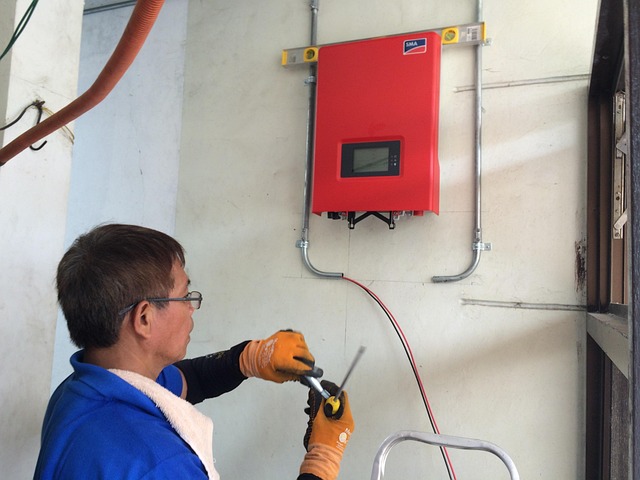
When planning a residential solar installation, homeowners often spend most of their time researching solar panel brands and efficiencies. However, the most critical component of your entire clean energy system is actually the inverter. Panels generate raw direct current (DC) electricity, but your appliances and the utility grid run exclusively on alternating current (AC) electricity. The inverter serves as the computational brain that handles this vital power translation.
The solar market has consolidated into a structural debate between two completely different engineering philosophies. You must choose between a centralized string inverter system or a decentralized microinverter system.
Choosing the wrong architecture can lead to lower energy production, restricted battery expansion options, and unexpected out-of-pocket maintenance costs. This comprehensive review breaks down the performance data, real-world costs, and long-term warranties of both technologies to help you make an informed decision.
Deciphering the Architectures: Centralized vs. Decentralized
The core difference between these two systems comes down to where the actual DC to AC electrical conversion takes place on your property.
1. Traditional and Optimized String Inverters
In a traditional string configuration, your solar panels are linked together in a series chain, similar to a string of holiday lights. The high-voltage DC electricity generated by every panel travels down a single line to a centralized inverter box installed on an exterior garage or basement wall.
Modern variations, such as systems from SolarEdge or integrated Tesla architectures, include power optimizers mounted behind each individual panel. These optimizers condition the DC power at the roof level to maximize efficiency, but the actual conversion to usable AC electricity still occurs at the single central box.
2. Microinverter Systems
Microinverter systems, led by industry standards like the Enphase IQ8 series, eliminate the centralized conversion box entirely. Instead, a miniature, self-contained inverter is mounted directly beneath every individual solar panel on your roof.
The DC power is converted to household AC power immediately at the panel site. This means the electricity traveling down from your roof is already standard, safe AC power ready to feed your main electrical breaker board.
The Comprehensive 2026 Inverter Comparison Matrix
Evaluating hardware requires analyzing how component layouts alter performance metrics, safety profiles, and system longevity over time.
Performance Metric | Traditional String Inverters | Optimized String Inverters | Modern Microinverters |
Conversion Location | Centralized box on wall | Centralized box on wall | Decentralized on roof |
Panel Optimization Level | System level (Weakest link) | Individual panel level | Individual panel level |
System Voltage Baseline | High-voltage DC (Up to 600V) | High-voltage DC (Up to 400V) | Low-voltage AC (Under 60V) |
Shading Impact Profile | Severe (Drags down full string) | Low (Isolated to shaded panel) | Low (Isolated to shaded panel) |
Standard Hardware Warranty | 10 to 12 Years | 12 Years (Inverter) / 25 Years (Optimizers) | 25 Years (Standard) |
Single Point of Failure | Yes (Inverter failure kills system) | Yes (Inverter failure kills system) | No (One failure drops one panel) |
Average Installed Cost | Lowest ($0.30 – $0.40 per watt) | Moderate ($0.35 – $0.45 per watt) | Highest ($0.50 – $0.70 per watt) |
Efficiency and the Shading Dilemma
The primary reason microinverters and power optimizers have captured the majority of the residential market is their ability to mitigate shading and debris losses.
The Weakest Link Problem
In a basic, unoptimized string setup, the entire array can only perform as well as its lowest producing panel. If a single panel is blocked by tree branches, morning shade, or fallen leaves, the electrical current through the entire string bottlenecks. A small amount of shade on one panel can cause the power output of the whole system to drop by more than 50 percent.
Independent Execution
Microinverters completely isolate each panel. If a passing cloud or a chimney shadow blocks one section of your roof, only that specific panel suffers a drop in production. The remaining panels continue to pump clean energy to your home at 100 percent capacity.
Field data shows that for complex roofs with multiple angles or partial shading, this panel level independence increases total lifetime energy production by 5 percent to 25 percent compared to standard string designs.
Upfront Hardware Cost vs. Lifetime Value
Budget constraints are the main reason some homeowners still select centralized string systems. Microinverters require buying a separate computer processor for every single panel, which creates a higher upfront bill.
The Initial Price Premium
For a typical 8-kilowatt residential solar array, choosing microinverters will generally add an upfront premium of $1,500 to $2,500 to your total installation cost. If your roof faces directly south, has an open view of the sky, and experiences absolutely zero shading throughout the day, a basic string system will deliver comparable energy generation for a lower initial out-of-pocket investment.
Accounting for Replacement Cadences
However, your long-term return on investment calculation must account for component lifespans. Centralized string inverters work under intense heat and high voltage loads, giving them a realistic operational life of 10 to 15 years. This means you will likely have to pay a technician roughly $2,000 to $3,500 to swap out the central box at least once during your solar array's 25-year lifecycle.
Microinverters are built with solid-state components designed to match the 25-year lifespan of the solar panels themselves. Their standard 25-year manufacturer warranties mean any rare component failures are fully covered, eliminating mid-life system maintenance bills.
Battery Storage and Outage Resilience
As more utility companies move away from favorable net metering structures, pairing your solar system with a home battery is essential. Your choice of inverter dictates how smoothly your system handles a blackout.
AC-Coupled (Microinverter Path):
[Solar Panel] -> [Microinverter (AC)] -> [Home Panel / AC Battery]

DC-Coupled (String Inverter Path):
[Solar Panel] -> [High-Voltage DC Line] -> [Hybrid Inverter] -> [DC Battery]
Battery Coupling Preferences
Microinverter systems inherently produce AC power on your roof, making them the perfect match for AC-coupled battery storage systems like the Enphase IQ Battery or the Tesla Powerwall 2. If you prefer a DC-coupled battery architecture, which stores raw DC power directly to maximize round-trip efficiency, utilizing a hybrid string inverter is often the cleaner engineering choice.
Grid-Forming Capabilities
Next-generation microinverter tech has unlocked impressive off-grid capabilities. For example, systems utilizing Enphase IQ8 hardware possess grid-forming technology. If the public power grid crashes during a clear day, these smart microinverters can automatically decouple from the utility lines and continue generating real-time solar electricity directly to your home's active circuits, even if you do not own a physical storage battery.
The Editorial Verdict: Which Technology is Best For You?
Neither technology is a universal winner. The right hardware choice depends entirely on your home's roof layout, shade profile, and long-term financial strategy.
You should choose Microinverters if:
Your roof has a complex shape, multiple levels, or faces multiple directions (e.g., East and West layouts).
Your property experiences partial shade from trees, power lines, or neighboring structures during the day.
You want a highly reliable system with no single point of failure and a guaranteed 25-year warranty lifecycle.
You plan to start with a smaller solar array today and want the flexibility to add more panels easily in the future.
You should choose a String Inverter (or Optimized String) if:
Your roof is a single, large, unshaded plane facing directly South with perfect sun exposure.
You want to minimize your upfront capital investment to secure the fastest possible payback period.
You are installing an integrated hybrid backup system (like a Tesla Powerwall 3 platform) that uses a built-in central inverter to manage panels and batteries together.
Related Articles
Home Energy Solutions
Phase Change Materials: The Smart Insulation Cooling Your Home Permanently
Home Energy Solutions
Matter 1.4 Energy Management: Unifying Smart Appliances and Solar Grids
Home Energy Solutions
Perovskite Tandem Solar Cells: Bypassing the Silicon Efficiency Limit
Home Energy Solutions
Saltwater Batteries vs. Lithium: A Safe, Sustainable Home Storage Option
Home Energy Solutions
Best Smart Electrical Panels for 2026: SPAN vs. Schneider Pulse
Home Energy Solutions