
Energy Efficiency Tips
Phase Change Materials: The Smart Insulation Cooling Your Home Permanently
Traditional insulation only delays heat transfer, but phase change materials actively absorb and store it. This technical guide reviews the passive cooling power, material types, and installation methods of modern chemical building envelopes.
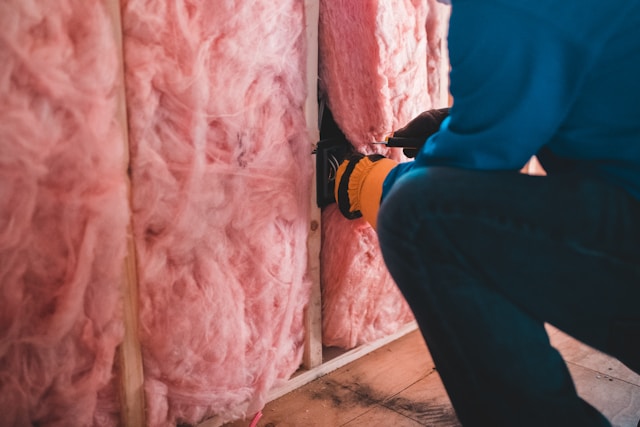
The standard approach to residential insulation has long relied on a singular metric: the R-value. For decades, homeowners and builders loaded structural wall cavities with fiberglass, cellulose, or spray foam to maximize thermal resistance. While these materials are effective at slowing down sensible heat transfer, they possess a fundamental limitation: they merely delay the entry of heat into a living space rather than neutralizing it.
As global temperatures continue to break records, relying entirely on static thermal resistance forces residential air conditioning units to work overtime. To create truly climate-resilient homes, architectural engineers are shifting from passive resistance to dynamic thermal management.
By integrating phase change materials for home insulation, the modern building envelope can actively absorb, store, and release heat. This chemical approach to climate control functions as an invisible thermal battery, keeping homes permanently cooler while slashing localized utility dependencies.
The Science of Latent Heat: How PCMs Operate
Phase Change Materials (PCMs) are advanced substances that leverage the physical principles of latent heat of fusion to regulate indoor environments. Unlike standard insulation, which relies on density and thickness to resist temperature shifts, PCMs alter their physical state to maintain a steady temperature.
The operational cycle coincides with daily outdoor temperature swings:
Daytime Melting (Heat Absorption): As solar radiation beats down on a house during a hot afternoon, the PCM layer reaches its targeted melting point, typically engineered between 21°C and 23°C (70°F to 74°F). Instead of allowing that heat to pass into the home, the material absorbs the energy to change state from a solid to a liquid, locking the ambient indoor temperature in place.
Nighttime Freezing (Heat Release): When outdoor temperatures drop during the evening, the liquid PCM solidifies. As it freezes, it safely releases its stored latent heat outward into the cool night air, resetting the chemical battery for the following morning.
The mathematical advantage of this process can be expressed through the fundamental equation for latent heat energy storage:
$$Q = m \cdot L$$
Where $Q$ represents the total stored thermal energy, $m$ is the mass of the material, and $L$ is the specific latent heat of fusion. Because the value of $L$ is exceptionally high for engineered PCMs, a thin half-inch layer of phase-change drywall can store the exact same amount of thermal energy as a solid concrete wall that is twelve inches thick, delivering immense thermal mass without the structural weight.
Key Types of Phase Change Materials in Construction
Modern builders select from three distinct chemical categories of PCMs based on structural demands, fire safety ratings, and budget parameters.
1. Organic PCMs (Paraffin and Bio-Based)
Organic options dominate the current residential insulation market. Paraffin waxes derived from petroleum refining are highly popular due to their predictable melting points and structural stability over thousands of freeze-thaw cycles.
However, green builders increasingly favor bio-based organic variants derived from plant oils and animal fats. These agricultural byproducts offer low ecological impact, are fully biodegradable, and feature excellent thermal capacities.
2. Inorganic PCMs (Salt Hydrates)
Inorganic phase change materials utilize structural configurations of water and inorganic salts. These systems boast higher thermal conductivities and significantly lower material costs than organic waxes.
Crucially, salt hydrates are naturally non-flammable, making them an excellent choice for strict urban fire zones. They must be carefully encapsulated to prevent long-term metal corrosion and chemical separation over time.
Form Factors: Integrating PCMs into the Home Matrix
Homeowners do not have to worry about liquid wax running through their walls. Advanced manufacturing encapsulation techniques have transformed raw PCMs into standard, easy-to-install building components.
Microencapsulated Drywall and Plasterboard
Microencapsulation wraps microscopic droplets of phase change polymer inside durable, protective plastic shells. These microscopic beads are mixed directly into standard gypsum drywall slurry during factory manufacturing. The finished plasterboard looks, cuts, and hangs exactly like traditional drywall, yet it provides active, automated temperature buffering for interior rooms.
Retrofit PCM Blankets
For properties undergoing energy efficiency upgrades, PCM blankets offer a highly versatile installation path. These sheets feature rows of sealed, dimpled plastic pouches containing bulk phase change polymers. Installers simply roll out the blankets directly over existing attic insulation or staple them inside open wall joists during a remodel, creating an immediate shield against radiant attic heat.
Technical Performance Showdown
To evaluate the true value of these chemical building envelopes, we must compare them against traditional insulation choices.
Building Insulation Material Matrix
Material Classification | Primary Thermal Mechanism | Real-World Energy Savings Potential | Structural Lifespan Projection | Structural Fire Safety Profile |
Fiberglass Batts | Convective air trapping | Baseline standard (0% added savings) | 20 to 30 Years (Prone to settling) | Naturally non-combustible |
Closed-Cell Spray Foam | High R-value gas restriction | 10% to 20% utility reductions | Lifetime of the structure | Requires ignition barriers |
Paraffin PCM Blankets | Latent heat absorption | 15% to 35% HVAC load reductions | 40+ Years (Highly stable) | Requires fire-retardant additives |
Bio-Based/Salt Tandems | Multi-spectrum latent storage | 25% to 45% peak cooling savings | Lifetime (Zero degradation) | Class A Fire Rated |
Financial Feasibility and Payback Timelines
Integrating advanced phase change tech into a residential property carries a cost premium over basic mineral wool or fiberglass. Bulk manufacturing pricing for high-grade paraffin and bio-based composites generally spans between $5 and $15 per kilogram for raw materials. For a standard two-story family home, choosing a comprehensive PCM drywall or blanket upgrade will typically add an extra upfront capital expenditure of $4,000 to $8,000.
However, the operational returns are highly consistent. Peer-reviewed field validations confirm that passive building envelope integration reduces residential cooling and heating demands by 15 percent to 45 percent depending on your local climate zone.
By shaving off peak power demands, homeowners can safely install smaller, less expensive HVAC systems during construction. Combined with lower monthly electricity bills, these reduced hardware expenses allow comprehensive passive PCM systems to achieve a full financial payback period within 8 to 15 years.
The Editorial Verdict
Phase change materials for home insulation represent a major evolution in the design of high-performance, low-carbon residential architecture. They shift the insulation conversation away from simply adding more bulk thickness, focusing instead on active molecular energy management.
If you are planning an extensive home renovation, designing a net-zero property, or building in an area with volatile daytime temperatures, incorporating PCM tech is an incredibly smart investment. By locking down stable indoor comfort levels passively, these advanced materials ensure your home stays cool, quiet, and energy-efficient for the long term.
Related Articles

Home Energy Solutions
Matter 1.4 Energy Management: Unifying Smart Appliances and Solar Grids
Home Energy Solutions
Perovskite Tandem Solar Cells: Bypassing the Silicon Efficiency Limit
Home Energy Solutions
Saltwater Batteries vs. Lithium: A Safe, Sustainable Home Storage Option
Home Energy Solutions
Microinverter vs. String Inverter: Which Solar Technology is Best?
Home Energy Solutions
Best Smart Electrical Panels for 2026: SPAN vs. Schneider Pulse
Home Energy Solutions