
Solar Panels & Inverters
Are Solar Panels Worth It in 2026? Net Metering and ROI Explained
The home solar landscape changed dramatically this year due to major federal policy shifts. This definitive 2026 breakdown details how new net metering rules, solar leases, and home battery storage affect your return on investment.

Are Solar Panels Worth It in 2026? Net Metering and ROI Explained
For more than a decade, the financial decision to transition to home solar was a relatively straightforward calculation. Homeowners simply paired mounting utility bills with a guaranteed 30% federal tax credit, resulting in an attractive, predictable return on investment (ROI).
That simple calculation no longer applies. Following the recent sunset of the direct Section 25D residential clean energy tax credit for cash and loan buyers, alongside sweeping adjustments to utility net metering structures across the country, the economics of home solar have completely shifted.
Despite these regulatory updates, solar power remains highly viable for millions of households. However, maximizing your financial return in 2026 requires understanding a entirely new set of rules regarding system design, financing choices, and battery integration.
The New Federal Landscape: Deciphering the OBBBA Shifts
The biggest adjustment for homeowners evaluating solar this year is the absence of a direct federal tax write-off if you purchase your system outright. Passed last year, the One Big Beautiful Bill Act (OBBBA) significantly accelerated the sunset of historical residential incentives.
The Direct Ownership Sunset
The long-standing 30% residential tax credit (Section 25D) officially concluded for cash and loan installations completed after December 31, 2025. If you purchase your solar panels or inverters directly in 2026, your upfront baseline cost will be higher than it would have been last year, which extends your system's payback period.
The Third-Party Lease Opportunity
While direct consumer tax credits have ended, the commercial investment tax credit (Section 48E) remains fully intact for a limited window. This has triggered a massive market shift toward third-party ownership model structures.
When you choose a solar lease or a Power Purchase Agreement (PPA), a specialized solar financing firm retains ownership of the hardware on your roof. This firm claims the 30% federal tax benefit directly and passes those savings down to you through lower monthly electricity rates.
The Federal Incentive Framework
Policy Framework | Cash or Loan Purchase (2026) | Third-Party Lease / PPA (2026) |
Direct Tax Credit (Section 25D) | $0 (Expired Dec 31, 2025) | Ineligible |
Commercial ITC (Section 48E) | Ineligible | 30% Base Credit (Claimed by Financier) |
Critical Policy Deadline | N/A | Must begin construction by July 4, 2026 |
Domestic Content Rules | N/A | Mandates $\ge$ 40% US-sourced hardware components |
The Net Metering Transformation (NEM 3.0 and Beyond)
Even more than tax updates, changes to local utility regulations dictate your long-term solar ROI. The era of traditional 1-to-1 net metering—where utilities credited you the full retail rate for every kilowatt-hour of solar energy you exported back to the grid—is rapidly drawing to a close.
Led by California’s established NEM 3.0 framework, states nationwide are transitioning to net billing and time-of-use (TOU) pricing. Under these updated frameworks, utilities buy your excess daytime solar power at drastically reduced wholesale rates, which are often 70% to 80% lower than retail prices.
Conversely, the utility continues to charge you peak retail rates when you pull power from the grid during the evening. This dynamic means that simply installing panels to export raw power to the grid during the afternoon is no longer an efficient way to eliminate an energy bill.
Net Metering Architecture Comparison
Metric / Feature | Traditional 1-to-1 Net Metering | Modern Net Billing (NEM 3.0 Style) |
Daytime Export Valuation | Equal to full retail rate (~$0.15 - $0.30/kWh) | Reduced to wholesale grid rate (~$0.03 - $0.08/kWh) |
Time-of-Use Volatility | Low (Flat rate credits) | High (Credits vary by hour and seasonal grid demand) |
Average Payback Period | 6 to 8 Years (Solar Only) | 11 to 14 Years (Solar Only) |
Optimal System Strategy | Maximize roof space for maximum generation | Pair panels with local battery storage |
The 2026 Solar Economics Matrix
Because the financial math has shifted, choosing how to pay for solar requires a careful look at the data. Your funding mechanism determines whether you prioritize immediate, day-one operational savings or long-term asset value.
Financing Structures and ROI Metrics
Financial Metric | Out-of-Pocket Cash | Solar Loan Program | Modern Lease / PPA |
Upfront Capital Required | High ($18,000 – $26,000) | Zero down | Zero down |
Monthly Payment Outlay | $0 | Variable loan payment | Fixed monthly lease rate |
Average Payback Horizon | 9 to 12 Years | 10 to 13 Years | Immediate day-one savings |
25-Year Cumulative Savings | Highest (Full asset yields) | Moderate (Reduced by interest fees) | Predictable (20% to 40% below grid baseline) |
Hardware Maintenance | Owner's responsibility | Owner's responsibility | Fully covered by financier |
Why Battery Storage is the Ultimate ROI Saver
Because utilities now credit pennies for daytime solar exports, the key to achieving a strong ROI in 2026 is maximizing your home's self-consumption. This reality transforms residential battery storage from an expensive luxury backup into a core economic necessity.
The Solar-Plus-Storage Loop
By combining your solar array with a smart home battery, you can completely bypass unfavorable net billing structures. Instead of selling your excess afternoon solar energy to the utility company for a minimal credit, your system stores that energy locally.
When evening arrives and utility rates spike to their highest peak levels, your home automatically switches over to run on your stored battery power. This self-contained consumption loop keeps your cheap solar electricity inside your home, insulating you directly from high utility peak charges.
Solar-Only vs. Solar-Plus-Storage Performance
Operational Capability | Solar-Only Configuration | Intelligent Solar + Storage |
Grid Power Dependency | Required for evening and cloudy periods | Minimized through local power reserves |
Export Tariff Mitigation | Poor (Forces cheap power sales to grid) | Excellent (Saves power for internal home consumption) |
Emergency Power Outages | System shuts down completely for safety | Keeps critical home circuits running seamlessly |
Grid Revenue Opportunities | None | Eligible for Virtual Power Plant (VPP) payouts |
The Editorial Verdict: Is Solar Still Worth It?
Solar panels remain a highly effective financial investment in 2026, but only if your system design matches today's regulatory environment.
Go solar if:
You live in an area with high electricity rates that continue to rise faster than inflation.
You choose a solar-plus-storage configuration that protects you from low net billing export rates.
You opt for a well-structured lease or PPA before the critical July 4, 2026 commercial construction deadline to capture indirect federal tax savings with zero down.
Avoid solar if:
Your local utility company still offers traditional 1-to-1 net metering and your regional electricity rates are exceptionally low.
Your roof suffers from heavy shade or faces entirely north, which prevents efficient generation.
You intend to relocate within the next two to three years, preventing you from fully realizing the long-term asset value or smoothly transferring a lease contract.
The final takeaway for 2026 is clear: do not let a solar contractor sell you a traditional, grid-tied system using outdated financial models. Insist on a localized quote that factors in your specific utility’s time-of-use rates, and prioritize smart battery storage to keep your clean energy right where it delivers the highest return: inside your own home.
Related Articles

Home Energy Solutions
Phase Change Materials: The Smart Insulation Cooling Your Home Permanently

Home Energy Solutions
Matter 1.4 Energy Management: Unifying Smart Appliances and Solar Grids
Home Energy Solutions
Perovskite Tandem Solar Cells: Bypassing the Silicon Efficiency Limit
Home Energy Solutions
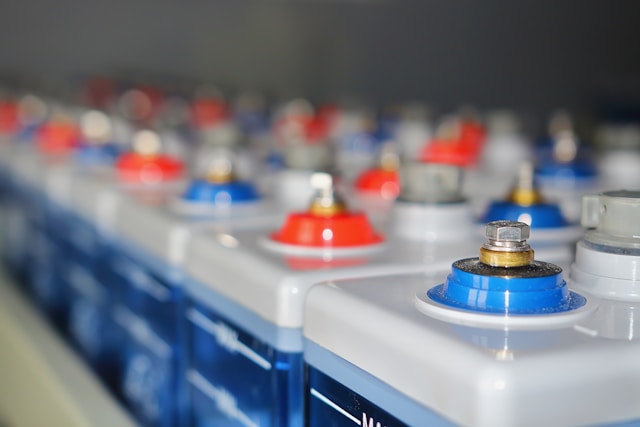
Saltwater Batteries vs. Lithium: A Safe, Sustainable Home Storage Option
Home Energy Solutions
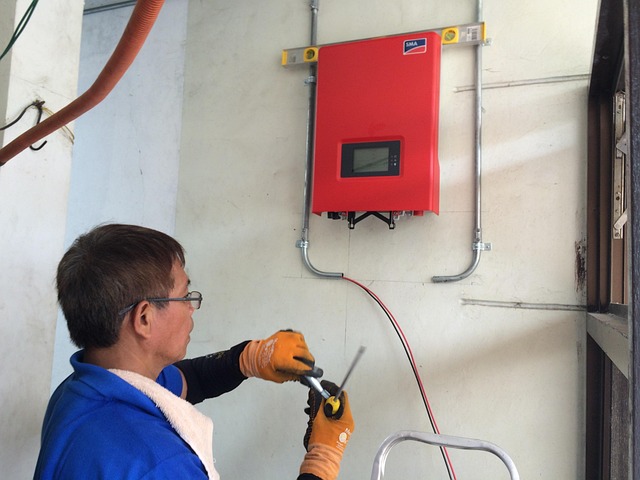
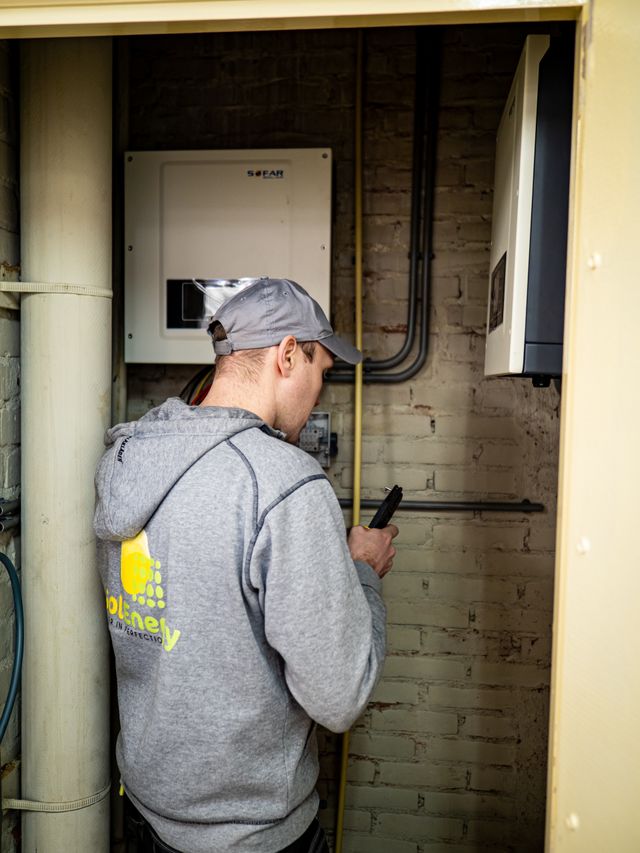
Microinverter vs. String Inverter: Which Solar Technology is Best?
Home Energy Solutions