
Charging Infrastructure
Megawatt Charging System (MCS): How the Grid Scales Heavy-Duty EV Freight
Electrifying long-haul logistics requires moving past legacy passenger car infrastructure. This technical review explores the Megawatt Charging System (MCS), its engineering layout, and its operational impact on commercial fleet logistics.
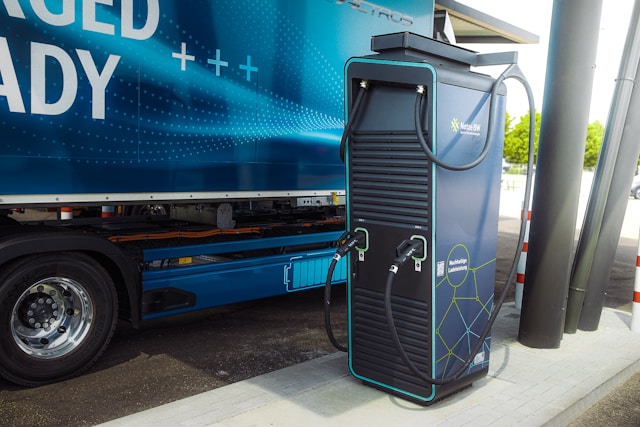
The electrification of commercial transportation has reached an architectural turning point. While local delivery vans and short-haul box trucks utilize mature passenger vehicle infrastructure, long-haul heavy-duty freight presents completely different challenges. Class 8 commercial vehicles carry massive battery capacities that require immense amounts of electricity to recharge efficiently.
Relying on standard charging infrastructure forces a heavy-duty truck to remain stationary for hours, disrupting strict logistics schedules. To solve this bottleneck, the global transport sector has introduced a high-capacity solution.
The Megawatt Charging System (MCS) represents an ultra-fast charging platform delivering 1,000 kW (1 MW) or more of continuous power. This technology alters the economics of sustainable logistics, making long-haul electric freight commercially viable.
What is the Megawatt Charging System?
The Megawatt Charging System is the designated global standard for conductive direct current (DC) charging of medium and heavy-duty vehicles. The platform represents an engineering leap past the Combined Charging System (CCS) standard used by consumer passenger vehicles.
The development of this technology reached a major regulatory milestone in February 2026. The International Electrotechnical Commission officially published the IEC 63379 version 1.0 standard, establishing a unified global framework for MCS connectors, vehicle inlets, and cable assemblies.
This technical specification provides the safety architecture, mechanical robustness, and thermal management metrics required to operate high-voltage fleet stations safely. As a result, major commercial vehicle manufacturers are releasing factory-fitted MCS configurations to fleet operators globally.
Technical Specifications: MCS vs. Legacy CCS2
To understand the scale of this infrastructure shift, we must analyze the raw electrical parameters. MCS increases both operating voltage and current limits to maximize energy throughput.
High-Power Infrastructure Benchmarks
Engineering Parameter | Combined Charging System (CCS2) | Megawatt Charging System (MCS) | Industrial Impact Factor |
Maximum Voltage | Up to 1,000 V DC | Up to 1,250 to 1,500 V DC | Enables high-efficiency energy transfer with lower heat losses. |
Maximum Current | Up to 500 A | Up to 3,000 A | Represents a six-fold increase in current capacity. |
Peak Power Output | 350 kW to 400 kW | 1.0 MW to 3.75 MW | Slashes stationary dwell times for large battery packs. |
Connector Design | Standard 4-Pin / 5-Pin | Specialized 7-Pin (IEC 63379) | Features a custom ergonomic profile for heavy-duty deployment. |
Primary Use Case | Passenger cars and local delivery | Class 6, 7, and 8 heavy-duty freight | Engineered for trucks, marine ferries, and aviation. |
The Hardware Layout of a Megawatt Charging Hub
Operating a commercial station at megawatt power levels requires an advanced hardware ecosystem. You cannot simply upgrade a plug and wire, you must install an integrated thermal and electrical management layout.
1. Liquid-Cooled Charging Infrastructure
Pushing current levels past 1,000 Amps generates extreme thermal energy inside the delivery lines. To prevent cables from melting or becoming too heavy for a driver to lift, MCS hardware utilizes active liquid cooling.
A specialized coolant fluid circulates continuously through the internal pathways of the cable and connector, absorbing excess heat during the charging cycle. This allows the physical cable to remain flexible and ergonomic for fleet drivers.
2. Substation Integration and Peak Shaving
A single station featuring multiple MCS dispensers creates a massive instantaneous load on the local electrical utility grid. Installing a multi-dispenser layout can easily require 10 MW to 50 MW of dedicated grid capacity.
The Grid Buffer Strategy: To avoid expensive utility upgrades and high peak-demand charges, operators are installing DC-based energy storage systems (BESS) directly on-site. These large stationary batteries charge slowly from the grid during low-cost periods and discharge rapidly into trucks during megawatt charging events, balancing local grid infrastructure.
Operational Impact on Commercial Logistics
For B2B fleet managers, the primary metric of success is vehicle uptime. MCS matches the physical demands of long-haul logistics by aligning with mandatory driver rest periods.
Long-Haul Operational Rhythms:
[4.5 Hours Driving] -> [45-Minute Mandatory Rest / 1 MW MCS Charge (20% to 80%)] -> [4.5 Hours Driving]
Under strict transport safety regulations, commercial truck drivers must take a mandatory 45-minute rest break after 4.5 hours of continuous driving. An MCS station delivering 1,000 kW can charge a typical heavy-duty truck battery from 20 percent to 80 percent state of charge in roughly 30 to 40 minutes.
This speed ensures that opportunity charging occurs entirely during a driver's legal downtime. Logistics operators can maintain standard route schedules without adding structural delays for fueling.
Furthermore, this rapid energy replenishment path alters vehicle acquisition strategies. Fleet operators can purchase trucks with smaller, lighter battery packs because they can top off their energy levels quickly en route. This reduction in battery deadweight increases the vehicle's remaining payload capacity, maximizing revenue potential per mile.
The Infrastructure Bottleneck and B2B Investment Costs
While the technical advantages of MCS are clear, scaling wide corporate deployment requires navigating significant capital expenditure (CAPEX) hurdles and infrastructure lead times. Developing a dedicated megawatt charging depot involves long-term grid interconnection planning, with utility approval timelines frequently extending from 12 to 24 months.
Governments are launching large subsidy programs to mitigate these initial deployment barriers. In May 2026, Germany's Federal Ministry of Transport announced a 1.16 billion dollar infrastructure initiative specifically focused on expanding high-power electric truck corridors and supporting MCS hardware deployment.
Fleet operators can lower their operational financial risk by building campus microgrids that integrate on-site solar generation, battery storage, and automated energy management software. This integration allows companies to minimize peak utility demand penalties while protecting their operations from localized power grid blackouts.
The Editorial Verdict
The Megawatt Charging System is no longer a distant engineering concept, it is an active operational necessity for global supply chains. The publication of unified international standards coupled with the commercial launch of MCS-compatible trucks from major manufacturers ensures that heavy-duty electrification is scaling rapidly.
For forward-looking logistics executives and infrastructure investors, waiting for complete grid coverage is a risky strategy. Building strategic partnerships with utility networks and deploying initial high-power charging depots today ensures your logistics fleet secures critical grid capacity ahead of competitors, future-proofing your supply chain for the net-zero era.
Related Articles

e-Mobility & EVs
Urban Air Mobility: When Will Commercial eVTOL Flights Take Off?

e-Mobility & EVs
Silicon Anode Batteries: Unlocking High Energy Density for Next-Gen EVs

e-Mobility & EVs
Hyundai Ioniq 9 vs. Kia EV9: Which Three-Row Electric SUV Wins?

e-Mobility & EVs
BMW iX3 Neue Klasse: A Radical Leap for Electric Luxury SUVs

e-Mobility & EVs
Rivian R2 Review: The New Mid-Size Premium Electric SUV Champion

e-Mobility & EVs