
Future Mobility
Urban Air Mobility: When Will Commercial eVTOL Flights Take Off?
The Advanced Air Mobility sector is shifting from experimental flight testing to strict aerospace regulatory validation. This analytical B2B guide maps the current FAA and EASA certification timelines for leading eVTOL developers.
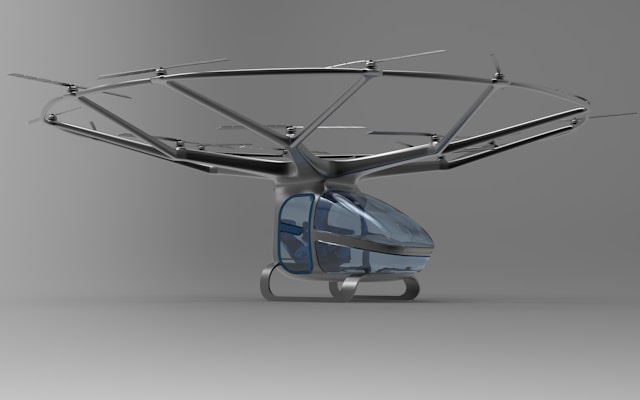
The dream of bypassing gridlocked city traffic via electric air taxis has occupied the intersection of science fiction and venture capital for nearly a decade. Today, the Advanced Air Mobility (AAM) industry has entered a critical phase of regulatory friction. The era of unverified prototype videos and speculative timelines has passed, replaced by the strict, non-linear realities of global aerospace type certification.
For tech investors, logistics professionals, and urban planners, tracking urban air mobility evtol certification timelines is no longer a passive exercise. It is a critical business metric.
As the Federal Aviation Administration (FAA) and the European Union Aviation Safety Agency (EASA) navigate the complexities of these novel aircraft architectures, the race to commercial entry into service has consolidated into a few frontrunners. This comprehensive industry analysis breaks down the current regulatory landscape, developer milestones, and structural headwinds defining the market.
The Regulatory Framework: The FAA’s Five-Stage Gauntlet
To legally carry paying passengers, electric vertical takeoff and landing (eVTOL) aircraft must secure a Type Certificate from civil aviation authorities. The FAA evaluates these aircraft under a specialized "powered-lift" category, utilizing a rigorous five-stage type certification model designed to ensure these vehicles match commercial airliner safety profiles.
FAA 5-Stage Certification Progress:
[1. Certification Basis] -> [2. Means of Compliance (MOC)] -> [3. Test Plans] -> [4. Type Inspection (TIA)] -> [5. Final Type Certificate]
A major turning point occurred in March 2026, when US Transportation Secretary Sean P. Duffy and the FAA officially unveiled eight strategic selections for the eVTOL Integration Pilot Program (eIPP). This White House-backed initiative bridges the gap between testing and commercialization, allowing certified developers to execute real-world operations in designated American skies. Initial public demonstrations under this framework are legally scheduled to commence operations this summer, providing the FAA with the live data layer needed to refine permanent air traffic scalability guidelines.
Deep Dive: Key Developer Timelines and Milestone Tracking
The global eVTOL sector is experiencing a divergence in execution schedules. While select American and Emirati operations are pushing for immediate market entry, other global heavyweights are voluntarily extending their flight-testing phases to optimize manufacturing maturity.
2026 Global eVTOL Certification Status Matrix
eVTOL Developer / Aircraft | Regulatory Authority | Current Core Certification Milestone | Target Commercial Entry to Service |
Joby Aviation (S4 Platform) | FAA (USA) / GCAA (UAE) | Stage 4 (Type Inspection Authorization) | Late 2026 (Dubai) / 2027 (USA) |
Archer Aviation (Midnight) | FAA (USA) / GCAA (UAE) | 100% Means of Compliance Accepted | 2026 (Pilot tests) / 2028 (LA Olympics) |
Beta Technologies (Alia) | FAA (USA) | Advanced Stage 4 Flight Conformance | Late 2026 / 2027 (Logistics Focus) |
Eve Air Mobility (Embraer) | ANAC (Brazil) / FAA | Full-Scale Prototype Flight Evaluation | 2028 (Rescheduled Timeline) |
1. Joby Aviation: The Inflexion Point Leader
Joby Aviation remains positioned at the forefront of the commercialization race. Supported by a robust balance sheet featuring over 2.6 billion dollars in total cash and near-term capital reserves, the company achieved its largest quarterly regulatory advance by executing an 18-point leap in Stage 4 (Type Inspection Authorization) testing compliance.
Joby is actively manufacturing its first full FAA-conforming aircraft assemblies to support piloted type testing. The firm's commercial roadmap targets launching its initial commercial passenger routes in Dubai by late 2026, leveraging a strategic vertical integration partnership with Uber and Blade Passenger Segment assets to secure early market dominance.
2. Archer Aviation: The Strategic Long-Game
Archer Aviation achieved a massive regulatory breakthrough during its March 2026 market update, announcing that the FAA has officially accepted 100 percent of the Means of Compliance (MOC) for its signature Midnight air taxi platform. Securing full MOC acceptance resolves a complex technical hurdle regarding how aircraft charge states are communicated to pilots under dynamic human-factor alert constraints.
Archer is utilizing a diversified monetization strategy, executing defense applications alongside commercial routes. The company is pacing its final vehicle type validations to support a high-profile commercial network launch centered around the 2028 Summer Olympic Games in Los Angeles.
3. Eve Air Mobility: Prioritizing Flight Maturity
In a significant strategic update released in May 2026, Eve Air Mobility (a subsidiary of aerospace giant Embraer) announced it has voluntarily rescheduled its targeted type certification deadline from 2027 to 2028. Following the successful assembly and initial testing of its full-scale prototype, Eve management determined that a full 12-month extension of dedicated transition flight testing was necessary.
This window allows engineers to integrate flight data directly into conforming production models, maximizing long-term battery payload retention, optimizing acoustics, and lowering lifetime operating costs per seat-mile ahead of mass factory rollouts.
Infrastructure and Human Capital: The Real Scalability Bottlenecks
Even when an eVTOL developer secures final type certification, building a profitable, high-utilization ecosystem requires resolving severe infrastructure and labor shortages.
The Vertiport Infrastructure Gap: Current global market intelligence reports indicate that roughly 1,504 vertiports are actively planned for construction worldwide, with 92 major US cities mapping urban flight corridors. However, converting legacy helipads and building out high-voltage megawatt ground-charging infrastructure requires navigating localized municipal zoning laws and intensive utility grid allocations.
The Pilot Training Shortage: The rapid ramp-up of planned production capacities—with frontrunners targeting outputs of 500 to 700 aircraft per year by 2027—has triggered an acute pilot access problem. Because early eVTOL models require human pilots before transitioning to autonomous systems, operators are pulling from a limited pool of military powered-lift veterans (e.g., V-22 Osprey or F-35B operators). Training new civilian pilots to master these aircraft takes 12 to 15 months, costing upwards of $100,000 per individual candidate.
The Editor's Verdict
Urban Air Mobility has successfully graduated from a speculative technology segment into an active, highly regulated asset class. The deployment of the FAA's eIPP framework ensuring live operations by this summer means 2026 represents the official commercial inflection point for the industry.
For corporate logistics officers, real estate developers, and infrastructure investors, the next 12 to 18 months will separate execution leaders from over-leveraged concepts. While short-term regulatory delays may alter specific quarterly timelines, the technical momentum of 800V extreme fast charging and advanced fly-by-wire controls ensures that electric air taxi networks will reshape metropolitan regional transit corridors before the turn of the decade.
Related Articles

e-Mobility & EVs
Silicon Anode Batteries: Unlocking High Energy Density for Next-Gen EVs
e-Mobility & EVs
Megawatt Charging System (MCS): How the Grid Scales Heavy-Duty EV Freight

e-Mobility & EVs
Hyundai Ioniq 9 vs. Kia EV9: Which Three-Row Electric SUV Wins?

e-Mobility & EVs
BMW iX3 Neue Klasse: A Radical Leap for Electric Luxury SUVs

e-Mobility & EVs
Rivian R2 Review: The New Mid-Size Premium Electric SUV Champion

e-Mobility & EVs