
Future Mobility
Why Do EV Tires Wear Out Faster? How to Maximize Tire Lifespan
Electric vehicles eliminate oil changes and engine maintenance, but many owners face a surprise cost at the tire shop. This data-driven guide explains why electric car tires wear out faster and how to safely extend their operational lifespan.
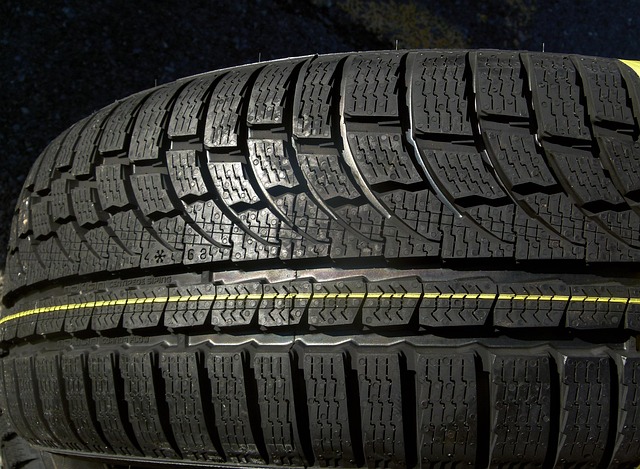
When drivers transition to an electric vehicle, the financial pitch is incredibly compelling. You trade volatile gas prices for cheap residential electricity, eliminate oil changes, and wave goodbye to spark plugs, fuel filters, and complex transmission services.
However, as the first wave of multi-year EV adopters hits the roads in high volumes, a distinct, hidden maintenance cost has come to light. Many drivers are discovering that their tire tread is disappearing far quicker than it did on their legacy internal combustion engine vehicles.
It is not bad luck or a product defect. Industry studies confirm that electric vehicle tires wear out roughly 15% to 30% faster than those on conventional gasoline vehicles. Understanding the core physics behind this accelerated wear is the key to preventing unexpected maintenance bills.
The Core Culprits Behind Accelerated Tire Wear
The accelerated degradation of EV tread is driven by three distinct physical forces acting on the tire contact patch simultaneously.
1. The Burden of Battery Weight
Electric vehicles are significantly heavier than their gasoline counterparts due to the massive energy density requirements of modern battery packs. A typical EV battery pack adds anywhere from 700 to 1,600 extra pounds to the vehicle chassis.
This continuous vertical load puts immense structural pressure on the tire sidewalls and contact patch. Every time you negotiate a turn, accelerate from a stop, or travel over a rough road surface, the heavy weight presses the rubber compound harder against the asphalt, accelerating mechanical friction.
2. Instantaneous Torque and Micro-Slippage
Gas engines require time to build up revolutions per minute (RPM) to deliver maximum power. Electric motors, by contrast, deliver 100% of their available torque instantly the moment your foot touches the accelerator pedal.
While this instant response makes EVs incredibly fun to drive, it is brutal on rubber compounds. The sudden surge of power causes a continuous series of microscopic slips between the tire tread and the road surface. Even if you do not hear the tires screeching, these mini-slips act like coarse sandpaper, rapidly scrubbing away the outer layers of the tread.
3. Regenerative Braking Shear Stress
Regenerative braking is a vital technology that captures kinetic energy during deceleration and pumps it back into the battery to extend driving range. However, this feature forces the tires to work twice as hard.
In a standard vehicle, tires experience longitudinal force primarily during acceleration while mechanical brake pads handle slowing down. In an EV using one-pedal driving modes, the tires are constantly subjected to opposing forces: intense pushing to speed up, immediately followed by strong dragging forces to slow down. This continuous shifting of direction subjects the rubber to extreme shear stress.
Technical Blueprint: EV Tires vs. Standard Tires
Because the operating environment of an electric vehicle is so demanding, mounting standard passenger car tires on an EV is highly dangerous and financially inefficient. Tire manufacturers have engineered specialized EV-specific models to handle these unique challenges.
Hardware Comparison Matrix
Structural Feature | Standard Passenger Car Tire | Specialized EV-Specific Tire |
Load Rating Capacity | Standard Load (SL) rating | Extra Load (XL) or High Load (HL) rating |
Internal Belting | Traditional steel and nylon layers | Reinforced sidewalls with high-tensile aramid fibers |
Tread Compound Focus | Balanced grip and long mileage life | High-stiffness resin with low rolling resistance |
Cabin Noise Control | Standard hollow tire cavity | Integrated acoustic dampening polyurethane foam |
Typical Lifespan on an EV | 15,000 - 25,000 miles (Rapid wear) | 35,000 - 50,000 miles (With warranty protection) |
Step-by-Step Plan to Maximize Your EV Tire Lifespan
While you cannot change the weight of your vehicle, you can alter your daily driving habits and maintenance routines to successfully push your tire lifespan past the 40,000-mile mark.
1. Tighten Your Rotation Schedules
On a traditional front-wheel-drive gasoline car, tires are usually rotated every 10,000 miles. Because EVs deliver intense power and experience regenerative braking forces mostly on the primary drive axle, tire wear is highly uneven. You must cut your rotation intervals in half, swapping your tires every 5,000 to 7,000 miles to distribute the mechanical workload evenly across all four wheels.
2. Practice Rigid Pressure Management
Electric vehicles are exceptionally sensitive to tire inflation levels. Because the vehicle is heavy, running even three to four PSI under the manufacturer's recommendation causes the tire shoulder to flex excessively, creating high internal heat and rapid tread shoulder wear. Check your tire pressure monthly using a dedicated digital gauge, adjusting the settings to match the exact PSI specifications listed on your driver-side door jamb.
3. Embrace "Chill Mode" Software Settings
The temptation to exploit instant torque away from every traffic light is the single greatest enemy of tire longevity. Most modern electric vehicles feature a selectable driving profile labeled "Chill Mode" or "Eco Mode." Activating this setting electronically dampens the initial tip-in torque curve, delivering a smoother power ramp that eliminates micro-slippage without sacrificing highway merging performance.
Expected Maintenance Lifespans and Scenarios
To help budget for long-term ownership, look at how different operational styles alter the life expectancy and replacement cadence of a typical premium EV tire set.
Tire Performance Projections by Driving Profile
Driver Profile & Habit | Expected Set Lifespan | Primary Maintenance Action Required | Long-Term Budget Impact |
Spirited / Performance (Frequent fast starts, zero rotations) | 18,000 – 22,000 miles | Immediate replacement of front or rear drive axle sets | High lifetime cost per mile |
Standard Commuter (Mixed highway driving, annual rotations) | 30,000 – 35,000 miles | Routine alignments and mid-year cross rotations | Average predictable maintenance |
Efficiency Optimized (Chill mode active, monthly PSI checks) | 45,000 – 55,000 miles | Strict adherence to 5,000-mile rotation schedules | Lowest long-term cost of ownership |
The Editorial Verdict
Accelerated tire wear is a real factor of electric vehicle ownership, but it should not deter you from making the switch to clean transportation. The fuel savings gained by bypassing the gas pump still heavily outweigh the cost of upgrading your tires slightly more frequently.
When the time comes to buy a replacement set, resist the urge to buy cheap, standard discount tires. Investing upfront in high-quality, EV-certified product lines like the Michelin Pilot Sport EV, Bridgestone Turanza EV, or Goodyear ElectricDrive GT2 will deliver the reinforced structural strength, low rolling resistance, and low cabin noise your vehicle needs to maximize your daily driving range and lifetime tire investments.
Related Articles

e-Mobility & EVs
Urban Air Mobility: When Will Commercial eVTOL Flights Take Off?
e-Mobility & EVs
Silicon Anode Batteries: Unlocking High Energy Density for Next-Gen EVs
e-Mobility & EVs
Megawatt Charging System (MCS): How the Grid Scales Heavy-Duty EV Freight
e-Mobility & EVs
Hyundai Ioniq 9 vs. Kia EV9: Which Three-Row Electric SUV Wins?
e-Mobility & EVs
BMW iX3 Neue Klasse: A Radical Leap for Electric Luxury SUVs
e-Mobility & EVs