
Battery Tech
Silicon Anode Batteries: Unlocking High Energy Density for Next-Gen EVs
The commercial scaling of silicon anode batteries marks the end of graphite dominance in energy storage. Learn how silicon-carbon composites unlock extreme fast charging, ultra-high energy density, and extended driving ranges for next-generation electric vehicles.
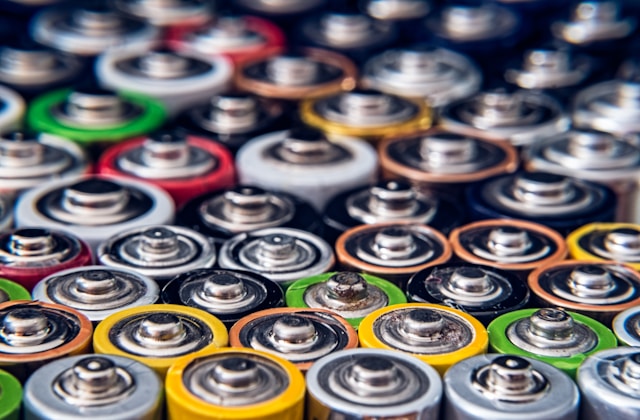
The global transition to sustainable mobility has historically been bottlenecked by a single component: the traditional lithium-ion battery anode. For decades, pure graphite served as the industry standard anode material, offering stable performance but reaching its absolute physical limits in energy storage capacity.
The energy landscape has officially breached that graphite ceiling. Automotive manufacturers, consumer electronics brands, and aviation developers are moving aggressively toward high-silicon architectures.
By replacing legacy carbon with structured silicon, battery manufacturers are unlocking performance levels that were previously considered impossible. This technical breakdown details the key silicon anode battery cell advantages driving the current performance arms race across electric vehicles, unmanned aerial vehicles (UAVs), and advanced energy storage systems.
The Chemistry Shift: Why Silicon Beats Graphite
To understand the core advantages of this technology, you must look at how lithium ions are stored at the atomic level during a charging cycle.
In a traditional battery, graphite anodes utilize an intercalation process, trapping lithium ions between layered sheets of carbon. It takes six carbon atoms to securely hold a single lithium ion.
Silicon operates through an entirely different alloy mechanism. A single silicon atom can bind with up to 3.75 lithium ions. This fundamental chemical difference means that silicon possesses an inherent theoretical energy capacity that is roughly ten times higher than pure graphite, allowing battery cells to become substantially smaller, lighter, and more powerful.
Core Silicon Anode Battery Cell Advantages
The transition to silicon-rich and silicon-carbon composite anodes delivers a multi-variable upgrade to modern energy storage. These key advantages alter the entire value proposition of electric transportation.
1. Massive Volumetric and Gravimetric Energy Density
Integrating silicon enables battery cells to hit energy densities reaching up to 400 watt-hours per kilogram (Wh/kg). Compared to the 200 to 300 Wh/kg limits of standard graphite lithium-ion packs, this represents an immediate capacity increase of up to 50 percent. For an electric vehicle, this translates directly to adding hundreds of miles of extra driving range without expanding the physical size of the underfloor battery enclosure.
2. Extreme Fast Charging (XFC) Capabilities
Silicon anodes facilitate exceptionally rapid lithiation pathways, allowing lithium ions to move into the anode structure with minimal electrical resistance.
The 10-Minute Charging Milestone: Premium silicon-carbon composite cells can safely achieve a 10 percent to 80 percent charge in under 10 minutes. This flash-charging capability effectively eliminates range anxiety, mimicking the brief refueling times of traditional gas stations.
3. Substantial Weight Reductions for Aerospace and UAVs
Because silicon holds far more energy per unit of mass, it drastically reduces the deadweight of the battery pack. This weight optimization is a massive breakthrough for drones, logistics UAVs, and electric vertical takeoff and landing (eVTOL) aircraft. Cutting battery mass extends flight times significantly, enabling long-range aerial cargo delivery and viable regional air mobility.
4. Sustainable, Domestically Secure Supply Chains
Unlike cobalt and lithium, which face complex geopolitical bottlenecks and concentrated processing monopolies, silicon is highly abundant. It can be sourced globally from industrial quartz, biomass, and sand byproducts. Scaling up silicon production allows regions like North America and Europe to establish localized, resilient battery material supply chains that comply with strict global trade and sourcing regulations.
Solving the Volume Expansion Challenge
While the benefits of silicon are revolutionary, the technology faced a notorious engineering obstacle for years: physical swelling. When a pure silicon anode is fully charged with lithium ions, it expands by up to 300 percent in volume. This repetitive swelling and shrinking causes the silicon particles to fracture, rapidly destroying the battery cell after only a few dozen cycles.
The industry has successfully cracked this degradation problem through two material science innovations:
Silicon-Carbon Nanocomposites: Advanced material suppliers like Group14 Technologies (with their SCC55 material) and Sila Nanotechnologies encapsulate microscopic silicon particles inside rigid, porous carbon scaffolding. This carbon matrix acts as a flexible shield, allowing the internal silicon to expand and contract smoothly without breaking the outer cell structure.
Targeted Prelithiation Materials: Cell manufacturers are utilizing stabilized lithium-donor powders during the initial manufacturing assembly. This prelithiation process compensates for irreversible lithium loss during early cycles, boosting first-cycle efficiency and extending the stable lifespan of high-silicon cells past 1,500 full charge-discharge cycles.
2026 Energy Storage Architecture Comparison
Evaluating the modern battery market requires benchmarking next-generation silicon cells against standard legacy platforms.
Battery Architecture Type | Average Cell Energy Density | 10% to 80% Fast-Charge Time | Primary Infrastructure Compatibility | Primary Target Market |
Lithium Iron Phosphate (LFP) | 160 – 200 Wh/kg | 25 – 35 Minutes | Existing Gigafactories | Budget EVs and stationary home storage |
Conventional Graphite Li-ion | 240 – 280 Wh/kg | 20 – 30 Minutes | Standard Baseline | Mid-tier cars and consumer electronics |
High-Silicon Anode Composite | 350 – 400 Wh/kg | Under 10 Minutes | Drop-in Ready Retrofit | Long-range luxury EVs, drones, and AI data centers |
The Drop-In Manufacturing Advantage
The final, crucial advantage of modern silicon anode technology is its drop-in manufacturing compatibility. Early next-generation battery architectures, such as pure solid-state systems, require automakers to spend billions of dollars building completely new factories from scratch.
Silicon-carbon composite materials bypass this capital expenditure barrier entirely. They are engineered to act as a direct drop-in replacement for standard graphite powders within existing gigafactory casting equipment.
Battery giants like Panasonic and LG Energy Solution can seamlessly integrate silicon materials into their active production lines without altering their core coating, drying, and winding machinery. This manufacturing compatibility slashes commercial scaling timelines, allowing automakers to deploy high-performance, long-range vehicles immediately without incurring massive capital disruption penalties.
The Strategic Outlook
The commercialization of silicon anode technology marks a permanent pivot in the global energy transition. It successfully answers the market demand for vehicles that travel further, charge faster, and cost less to manufacture.
For corporate automotive buyers, premium fleet managers, and climate tech investors, prioritizing platforms that integrate high-silicon cells is no longer an optional future luxury. It is a critical competitive necessity. By delivering substantial energy density gains and true 10-minute fast-charging capabilities within existing factory architectures, silicon anodes have cemented their position as the primary engine driving high-performance, sustainable mobility.
Related Articles

e-Mobility & EVs
Urban Air Mobility: When Will Commercial eVTOL Flights Take Off?
e-Mobility & EVs
Megawatt Charging System (MCS): How the Grid Scales Heavy-Duty EV Freight
e-Mobility & EVs
Hyundai Ioniq 9 vs. Kia EV9: Which Three-Row Electric SUV Wins?
e-Mobility & EVs
BMW iX3 Neue Klasse: A Radical Leap for Electric Luxury SUVs

e-Mobility & EVs
Rivian R2 Review: The New Mid-Size Premium Electric SUV Champion
e-Mobility & EVs