
EV Reviews & Launches
Solid-State EV Batteries: How Close Are We to Commercial Adoption?
Solid-state EV batteries are finally moving from laboratory myth to factory reality. Here is a look at the official 2027 production timelines from Toyota, Samsung, and BYD, and when everyday drivers can actually expect to buy one.
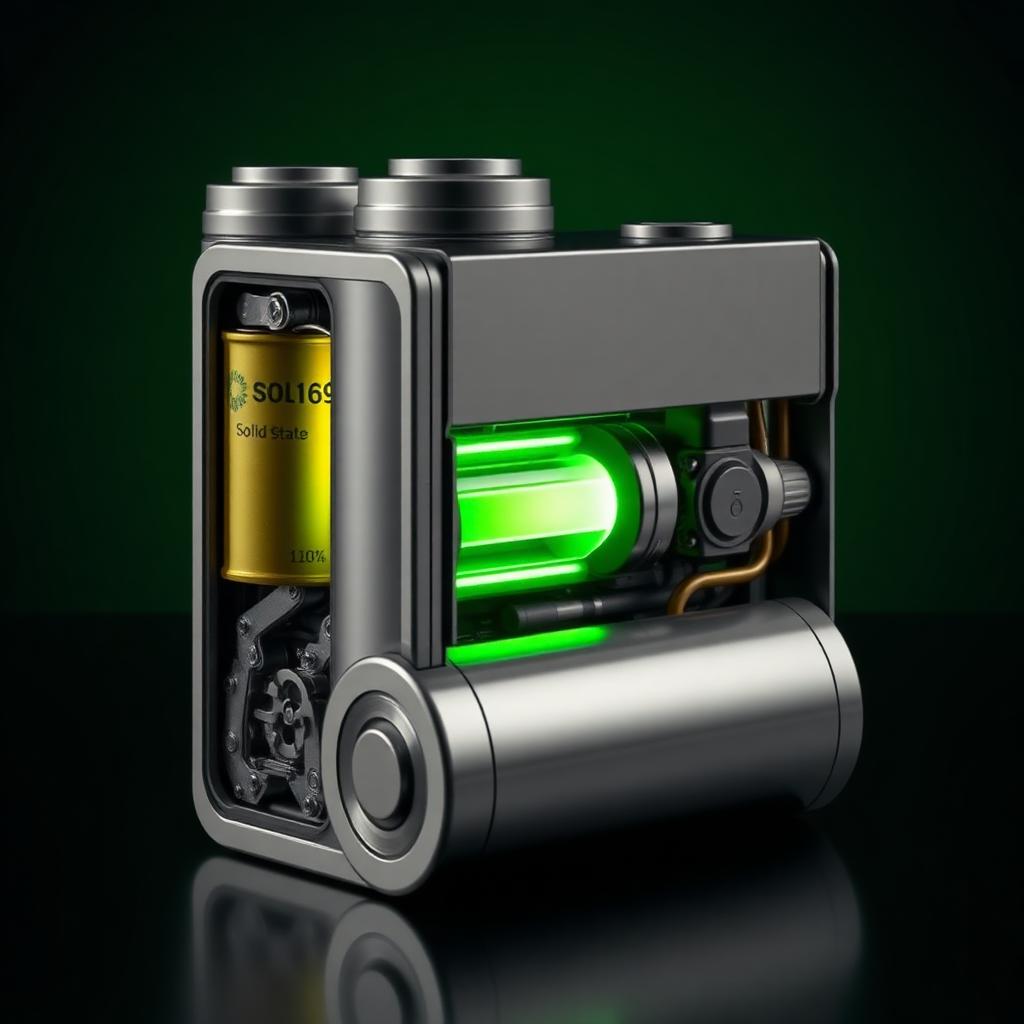
For years, solid-state batteries have been treated as the "holy grail" of the electric vehicle industry—perpetually promised, yet always seemingly a decade away. By replacing the volatile liquid electrolyte found in current lithium-ion cells with a solid material, this technology promises to double driving ranges, cut charging times to single digits, and virtually eliminate fire risks.
The timeline has finally shifted from laboratory speculation to concrete factory roadmaps. Major automakers and global battery suppliers are locked in a high-stakes production race, establishing firm release dates over the next few years.
The 2027 Turning Point: Real Deadlines Take Shape
The transition to solid-state technology is happening in two distinct phases: the current rollout of semi-solid batteries and the upcoming arrival of all-solid-state systems.
While semi-solid variants are already hitting roads in select Chinese EVs like the NIO ET7, the true industry disruption will occur when all-solid-state batteries land in commercial assembly lines. The consensus among top-tier manufacturers points directly to a 2027 launch window for initial commercial vehicles.
BYD: The battery and EV giant has entered the critical final testing stages for its sulfide-based all-solid-state cells. BYD plans to deploy these batteries in limited batches of its premium sub-brands (such as Yangwang and Denza) by 2027, before scaling up to broader mass-market production by 2030.
Samsung SDI: Leveraging an innovative "anode-less" architecture that utilizes a ultra-thin silver-carbon layer to prevent internal short circuits, Samsung has committed to full mass production by 2027. The company is currently validating prototype cells with premium partners, including BMW.
Toyota: Holding thousands of patents in sulfide-based solid electrolytes, Toyota has locked in a commercial release target between 2027 and 2028. Initial rollouts are expected to feature in high-performance or luxury models capable of adding hundreds of miles of range in under ten minutes.
SAIC Motor & Changan: These major state-owned Chinese manufacturers are simultaneously aggressively driving toward 2027. SAIC is aggressively testing prototypes with energy densities exceeding 400 Wh/kg, aiming for production-ready vehicles next year.
Why the Hype is Justified: Performance Breakthroughs
Solid-state technology represents a fundamental leap forward in material science, completely altering the ownership experience of an electric vehicle.
Overcoming the 600-Mile Range Barrier
Current top-tier lithium-ion cells top out at a volumetric energy density of roughly 450 Wh/L. In contrast, next-generation solid-state architectures—such as Samsung's silver-carbon configuration—are achieving 900 Wh/L. This compact footprint allows automakers to pack double the energy into the same physical space, effectively pushing real-world vehicle ranges past 600 to 900 miles on a single charge.
Single-Digit Charging Times
Liquid electrolytes require cautious charging speeds to prevent overheating and degradation. Solid electrolytes can tolerate drastically higher current densities without breaking down. Lab and pilot-line testing confirm that solid-state packs can safely replenish from 10% to 80% capacity in 9 to 10 minutes, mimicking the time it takes to fill a traditional tank of gasoline.
Eliminated Fire Risks and Extended Lifespans
Without a flammable liquid core, solid-state batteries are exceptionally stable under extreme temperatures and physical impacts. Furthermore, new material layers eliminate the formation of dendrites—microscopic, needle-like lithium structures that pierce traditional battery separators over time. This architectural stability stretches the projected lifespan of the battery pack up to 20 years, outlasting the vehicle chassis itself.
The Remaining Bottlenecks: Why Your Next EV Won't Have One
While the engineering milestones are being met, scaling this technology to millions of mass-market vehicles presents severe economic and manufacturing hurdles.
The Cost Premium: Manufacturing an all-solid-state cell is complex, currently costing between five to ten times more to produce than a conventional lithium-ion pack. Industry analysts estimate current solid-state production costs at $400 to $800 per kWh, compared to the traditional lithium-ion baseline of roughly $115 per kWh.
This price gap is driven by the extreme precision required during assembly. Solid-state manufacturing demands ultra-specialized, moisture-free cleanroom environments to prevent sulfide materials from reacting with ambient air. Additionally, maintaining a perfect, continuous physical connection between the solid electrolyte and the electrodes as they expand and contract during charging remains incredibly difficult to achieve on a high-speed conveyor belt.
The Realistic Timeline for Car Buyers
When can you actually buy an EV powered by a solid-state battery? The rollout will mirror how carbon fiber and turbocharged engines entered the market decades ago:
2027 – 2028 (The Luxury Era): The first all-solid-state batteries will debut exclusively in hypercars, low-volume luxury sedans, and high-end track vehicles. Buyers will pay a massive premium for the initial wave of 600-mile, ultra-fast charging capabilities.
2030 and Beyond (The Mass Market Transition): True economies of scale will not materialize until the turn of the decade. As gigafactories convert their assembly lines and supply chains mature, manufacturing costs will drop to parity with current tech, allowing solid-state batteries to finally trickle down into everyday family SUVs and commuter vehicles.
The solid-state timeline is no longer a ambiguous projection. The technology has successfully moved out of the laboratory and onto pilot assembly lines, setting up the late 2020s to be the most transformative era in modern automotive history.
Related Articles

e-Mobility & EVs
Urban Air Mobility: When Will Commercial eVTOL Flights Take Off?
e-Mobility & EVs
Silicon Anode Batteries: Unlocking High Energy Density for Next-Gen EVs
e-Mobility & EVs
Megawatt Charging System (MCS): How the Grid Scales Heavy-Duty EV Freight
e-Mobility & EVs
Hyundai Ioniq 9 vs. Kia EV9: Which Three-Row Electric SUV Wins?
e-Mobility & EVs
BMW iX3 Neue Klasse: A Radical Leap for Electric Luxury SUVs
e-Mobility & EVs